The IRS removed the Delinquent FBAR Submission Procedures at the end of June 2026, so late FBARs no longer have a published penalty-free path. You can still file late and explain why, or use Streamlined Domestic, which offers penalty protection in exchange for amended returns and a 5% penalty on the highest year-end balance.
6:52. The written version, the figures and the sources are all below.
| Non-willful FBAR penalty | $10,000 | Per violation, statutory, adjusted yearly for inflation. Source: Buchanan Ingersoll & Rooney, July 23, 2026. |
|---|---|---|
| Willful FBAR penalty | 50% | Of the maximum balance, or $100,000 adjusted, whichever is greater. Source: Buchanan Ingersoll & Rooney. |
| SDOP penalty rate | 5% | Of the highest aggregate year-end balance. Source: IRS SDOP page, reviewed July 2026. |
| SDOP look-back | 3 and 6 | Years of amended returns and years of FBARs. Source: IRS SDOP page. |
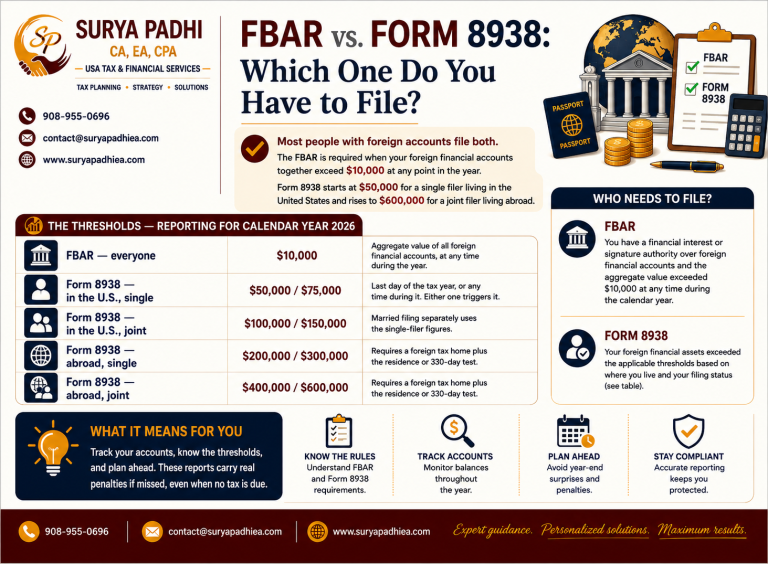
| FBAR filing threshold | $10,000 | Aggregate foreign account value at any time in the year. Source: IRS and FinCEN. |
The no-penalty path for late FBARs is gone. Streamlined Domestic still offers certainty, at a price.
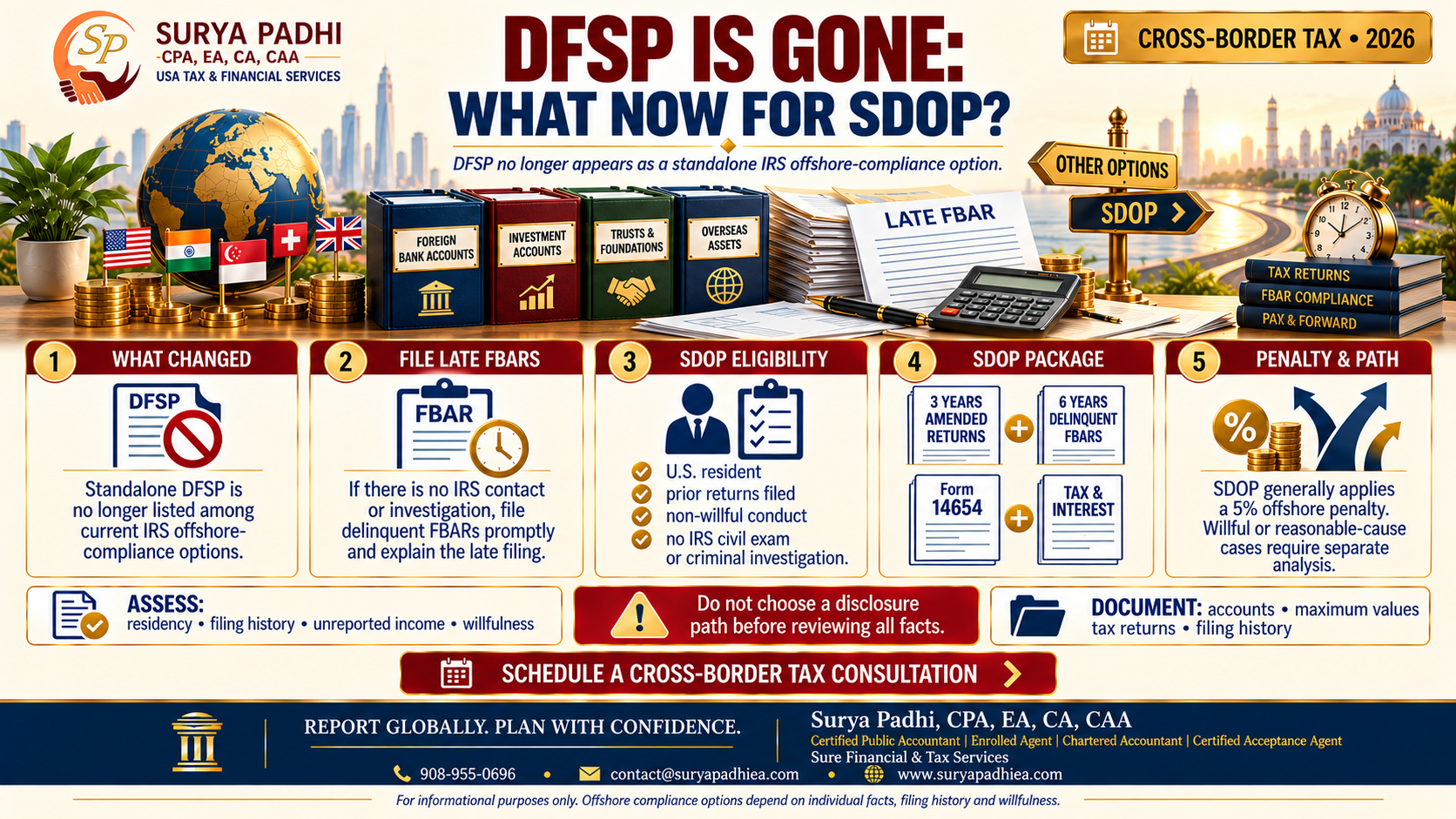
At the end of June 2026, the IRS removed the Delinquent FBAR Submission Procedures from its list of offshore compliance options. There was no press release and no transition guidance. For years, this was the quiet fix for taxpayers whose only mistake was a missing FBAR.
If you have late FBARs, that change matters, and it changes how the Streamlined Domestic Offshore Procedures (SDOP) should be weighed. This article covers what the old procedure promised, what remains, what SDOP costs, and the one question that decides the path.
Key takeaways
- The published no-penalty path for FBAR-only mistakes is gone, though a late FBAR is not automatically penalized.
- SDOP offers penalty protection for amended returns and a 5% penalty on the highest year-end balance.
- Willfulness decides the path. Streamlined requires a signed non-willful certification.
- The IRS can change or end these programs without notice, so a review should not wait.
What the Delinquent FBAR Submission Procedures did
The Delinquent FBAR Submission Procedures were built for a narrow group: people who had missed one or more FBARs but had otherwise done everything right. If you met the conditions, the IRS said it would not impose a penalty.
- All income from the foreign accounts had been reported on your US returns.
- All US tax on that income had been paid.
- The IRS had not contacted you, and you were not under civil or criminal investigation.
That written assurance is what disappeared. The IRS options page, last updated June 30, 2026, now lists three programs, and the Delinquent FBAR Submission Procedures are not among them.
A small date discrepancy
Tax firms reporting on the change date it differently: one says June 30, 2026 and another says July 1, 2026. The IRS did not publish an announcement, so this article says only that the removal happened at the end of June 2026.
What a late FBAR can cost now
Late filing is still possible. The IRS FBAR page says that if you have not been contacted and are not under investigation, you should file late FBARs as soon as possible to keep potential penalties to a minimum. It also says filing late, or not at all, is a violation that may bring penalties, and that whether a penalty is asserted depends on the facts and circumstances.
| Item | Statutory figure | What to know |
|---|---|---|
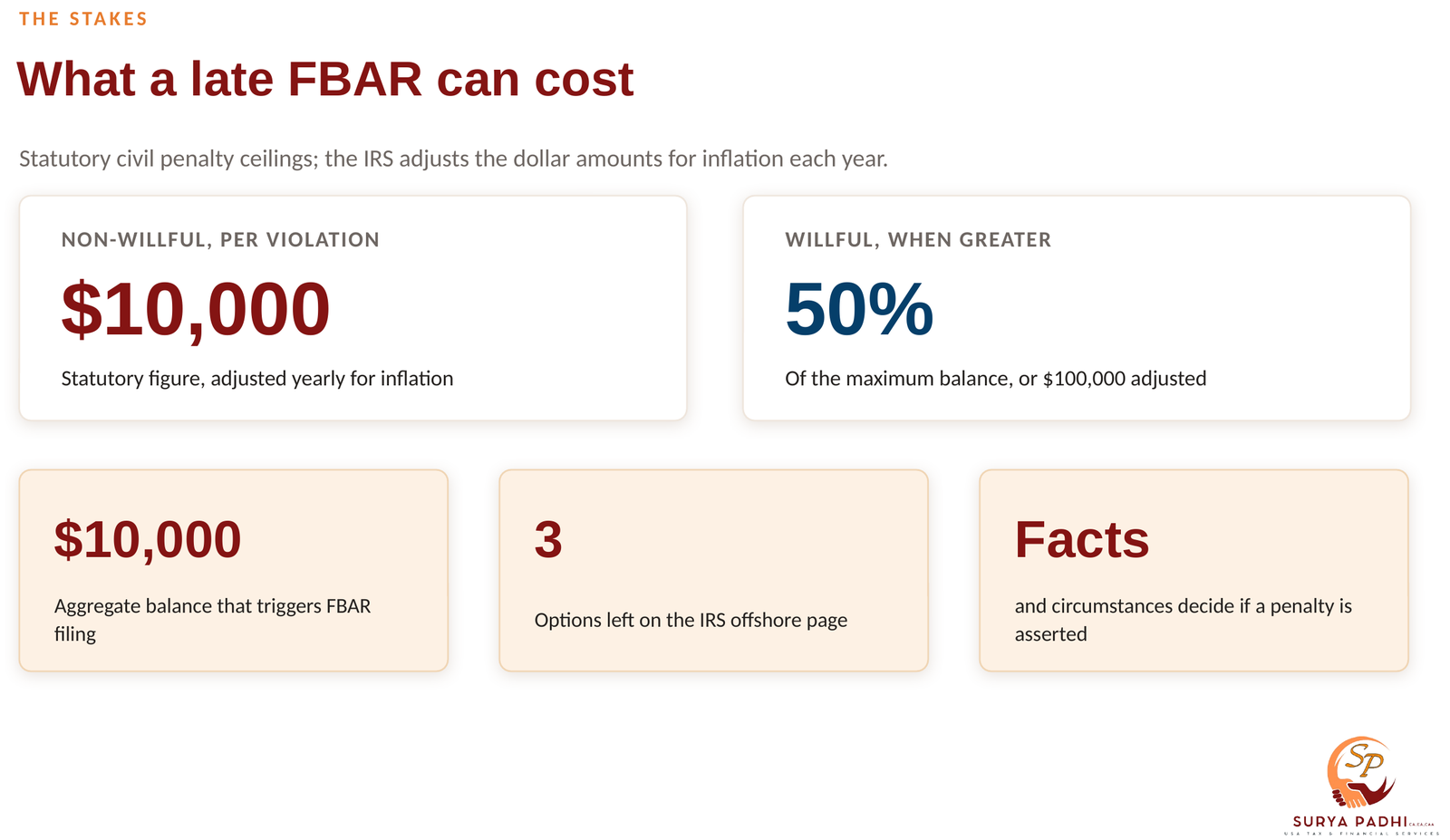
| Non-willful violation | $10,000 per violation | Adjusted for inflation each year. This is a ceiling, not a prediction. |
| Willful violation | Greater of $100,000 or 50% of the maximum account balance | The $100,000 amount is also inflation-adjusted. |
| Filing threshold | More than $10,000 in aggregate | At any time during the calendar year, across all foreign accounts. |
Penalty relief still exists through a reasonable cause exception, but it asks more of you than the old procedure did. You have to show that the failure was not willful neglect, and the explanation now carries real weight.
What the IRS still offers
Three programs remain on the IRS options page. They are not interchangeable.
- Voluntary Disclosure Practice (VDP): for willful conduct. It limits criminal exposure at a much higher civil cost. Buchanan Ingersoll & Rooney reports that the IRS is revising VDP, with changes expected later this year.
- Streamlined Filing Compliance Procedures: for non-willful conduct, in a Domestic version for US residents and a Foreign Offshore version for people living abroad.
- Delinquent international information return procedures: for late information returns with a reasonable cause statement. That IRS page does not mention FBARs.
A direct late FBAR filing through FinCEN is still possible. It simply no longer has a published penalty assurance behind it.
How the Streamlined Domestic Offshore Procedures work
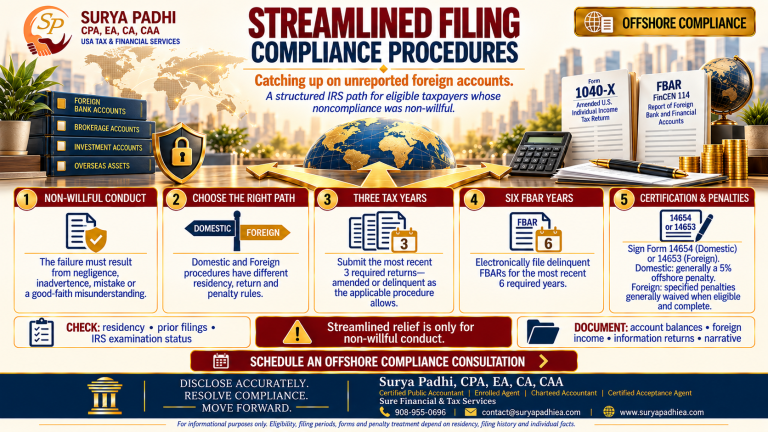
SDOP is designed for US residents whose failure to report foreign assets, pay tax or file information returns was non-willful. The IRS defines that as conduct due to negligence, inadvertence, mistake or a good-faith misunderstanding of the law.
- File amended returns for the three most recent years whose due dates, including extensions, have passed. Delinquent original returns cannot be filed under these procedures.
- File delinquent FBARs for the six most recent years whose due dates have passed.
- Sign Form 14654, certifying eligibility and that the conduct was non-willful, and attach copies to each return.
- Pay all tax and interest due, plus the miscellaneous offshore penalty of 5% of the highest aggregate year-end balance of your foreign financial assets.
The package goes by paper to the IRS in Austin, Texas, while the FBARs are filed electronically with FinCEN. In the FBAR explanation box, you select Other and enter the name of the procedure.
Illustrative only: the 5% in dollars
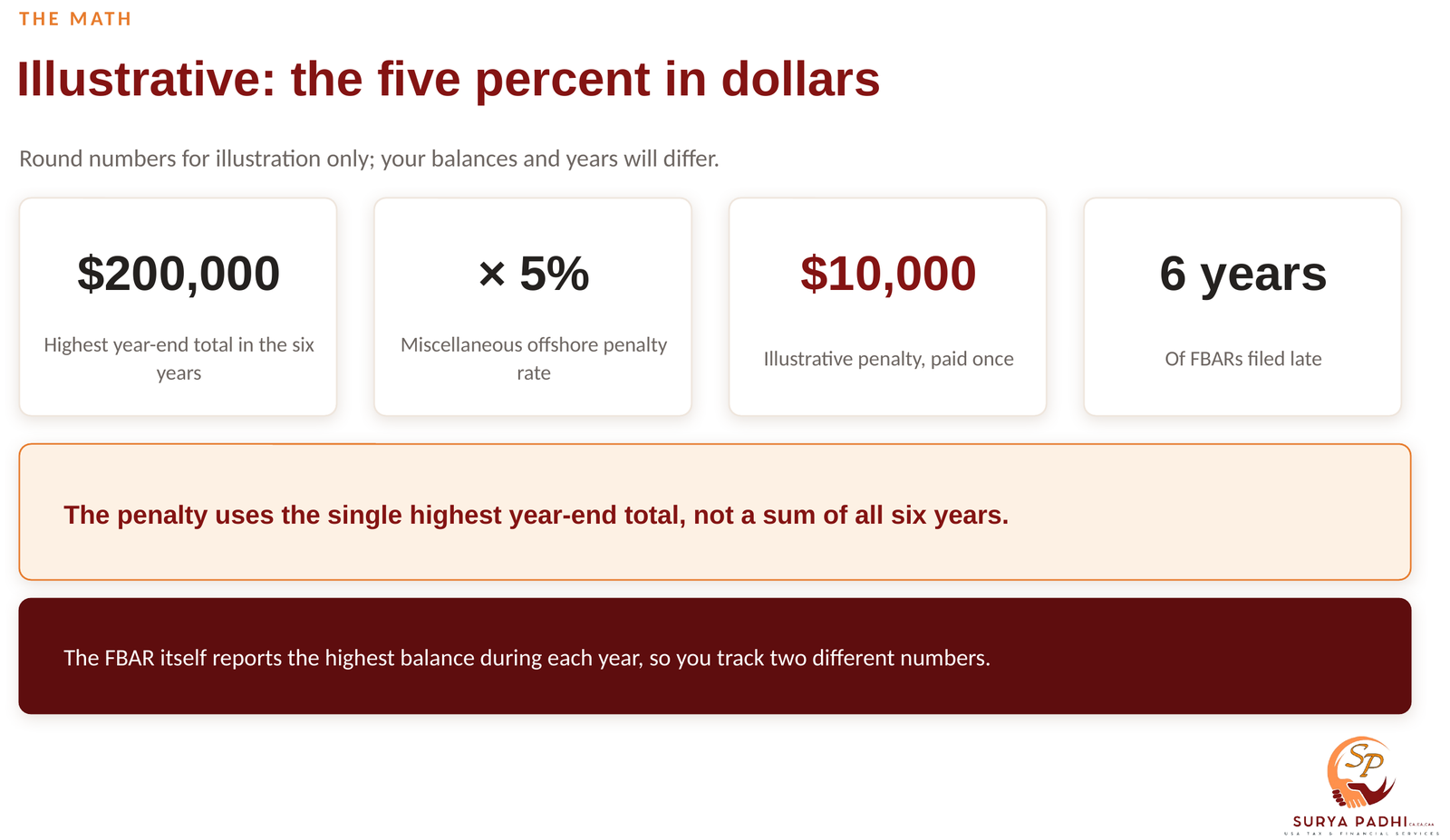
| Highest aggregate year-end balance in the covered years | $200,000 |
| Miscellaneous offshore penalty rate | 5% |
| Illustrative penalty, paid once | $10,000 |
Round numbers for illustration. The penalty uses the single highest year-end total, not a sum across years. The FBAR itself reports the highest balance during each year, so you track two different numbers.
The certification is signed
Compliant filers pay only the 5% penalty and avoid accuracy-related, information return and FBAR penalties. The IRS says that protection can be lost if an audit finds the original return fraudulent or the FBAR violation willful. Penalties already assessed are not abated.
Direct late FBAR or SDOP: how the choice shifted
Before the change, a taxpayer with FBAR-only mistakes had a free, published option, and SDOP was reserved for wider problems such as unreported income or missed forms. Now the FBAR-only taxpayer faces a real choice between a direct late filing with an explanation and SDOP, which buys certainty at a price the old procedure never charged.
| Late FBAR, filed directly | Streamlined Domestic | |
|---|---|---|
| Penalty assurance | None published | Only the 5% penalty, if non-willful |
| What you file | Late FBARs with an explanation | 3 amended returns, 6 FBARs, Form 14654 |
| Cost | Possibly nothing, possibly a penalty | 5% of the highest year-end total |
| Your statement | Reasonable cause explanation | Signed non-willful certification |
| Who qualifies | Not contacted, not under investigation | US resident, no civil exam or investigation |
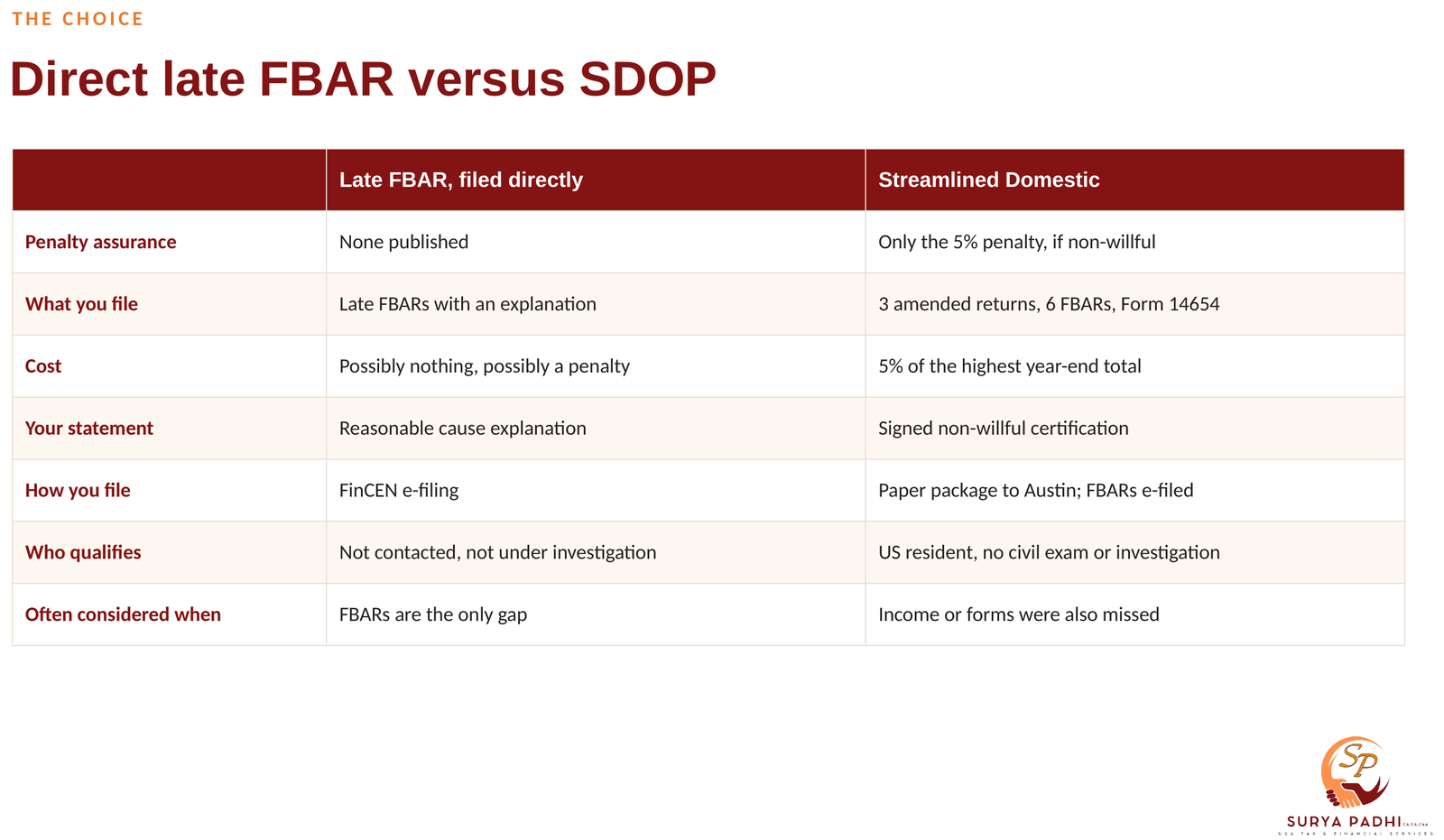
Direct filing is often considered when the FBARs are the only gap and the reason for the miss is credible. Streamlined is often considered when income or other international forms were also missed. Neither answer is automatic. Taxpayers living abroad use the Foreign Offshore version instead, which BNC Tax & Accounting describes as three years of returns and six years of FBARs with no penalty for eligible filers.
Indian accounts count
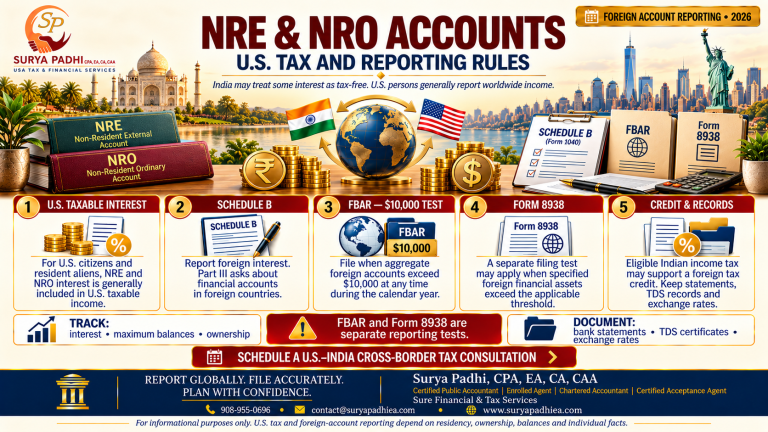
Indian NRE and NRO accounts are foreign financial accounts for FBAR purposes. List every account, with each year’s highest balance and year-end balance, before choosing a path. Indian filings themselves should go to a practising Chartered Accountant in India.
Willfulness decides everything
Every path above assumes your conduct was non-willful. If that is not clearly true, Streamlined is the wrong tool, and signing the certification could cost far more than it saves. Willful conduct belongs in the Voluntary Disclosure Practice, which generally reaches back six years and, as Buchanan describes it, carries a 75% civil fraud penalty on the year with the highest tax liability, plus willful FBAR penalties where they apply.
Bring in a tax attorney if willfulness is a real question
Hidden accounts, ignored advice or knowledge of the filing duty change the picture. Speak with a tax attorney before you file anything.
A sensible order of work
- Inventory every foreign account and year, with the highest balance and the year-end balance.
- Confirm that required returns were filed and all foreign income was reported.
- Test willfulness honestly, including what you knew and when.
- Choose between a direct late filing, Streamlined or counsel, and then file.
Timing matters. The FBAR is due April 15 following the year reported, with an automatic extension to October 15 if you miss it. And as Buchanan notes, remedial programs are administrative, so the IRS can change or end them at any time without notice. Streamlined itself may be discontinued, which is a reason not to wait.
A late FBAR is not automatically penalized, but waiting only narrows your options.
Frequently asked questions
Can I still file a late FBAR after the IRS removed the Delinquent FBAR Submission Procedures?
Yes. The IRS still tells taxpayers who have not been contacted, and are not under investigation, to file late FBARs as soon as possible. The difference is that there is no longer a published promise of no penalty.
Do I have to use the Streamlined Domestic Offshore Procedures for a late FBAR?
No. Streamlined is not required for every late FBAR. It is broader than FBAR filing and requires a signed certification that your conduct was non-willful, so the right choice depends on your facts.
How is the SDOP penalty calculated?
The miscellaneous offshore penalty is 5% of the highest aggregate year-end balance or value of your subject foreign financial assets, measured across the covered years. The highest single year is used, not a total across years.
What if my FBAR failure was willful?
Streamlined is not available for willful conduct. Willful failures are handled through the IRS Criminal Investigation Voluntary Disclosure Practice, and you should speak with a tax attorney before filing anything.
Late FBARs? Get the review first.
Sure Financial and Tax Services will walk through which path fits your facts before anything is filed. Call 908-955-0696, email contact@suryapadhiea.com or visit suryapadhiea.com.
This article is general tax education and does not constitute individualized tax, legal or financial advice. Figures are stated for the tax year shown and are subject to IRS adjustment. Consult a qualified professional about your own facts. Surya Padhi holds the Indian Chartered Accountant qualification but is not licensed to practise in India and does not provide Indian tax filing or advisory services.